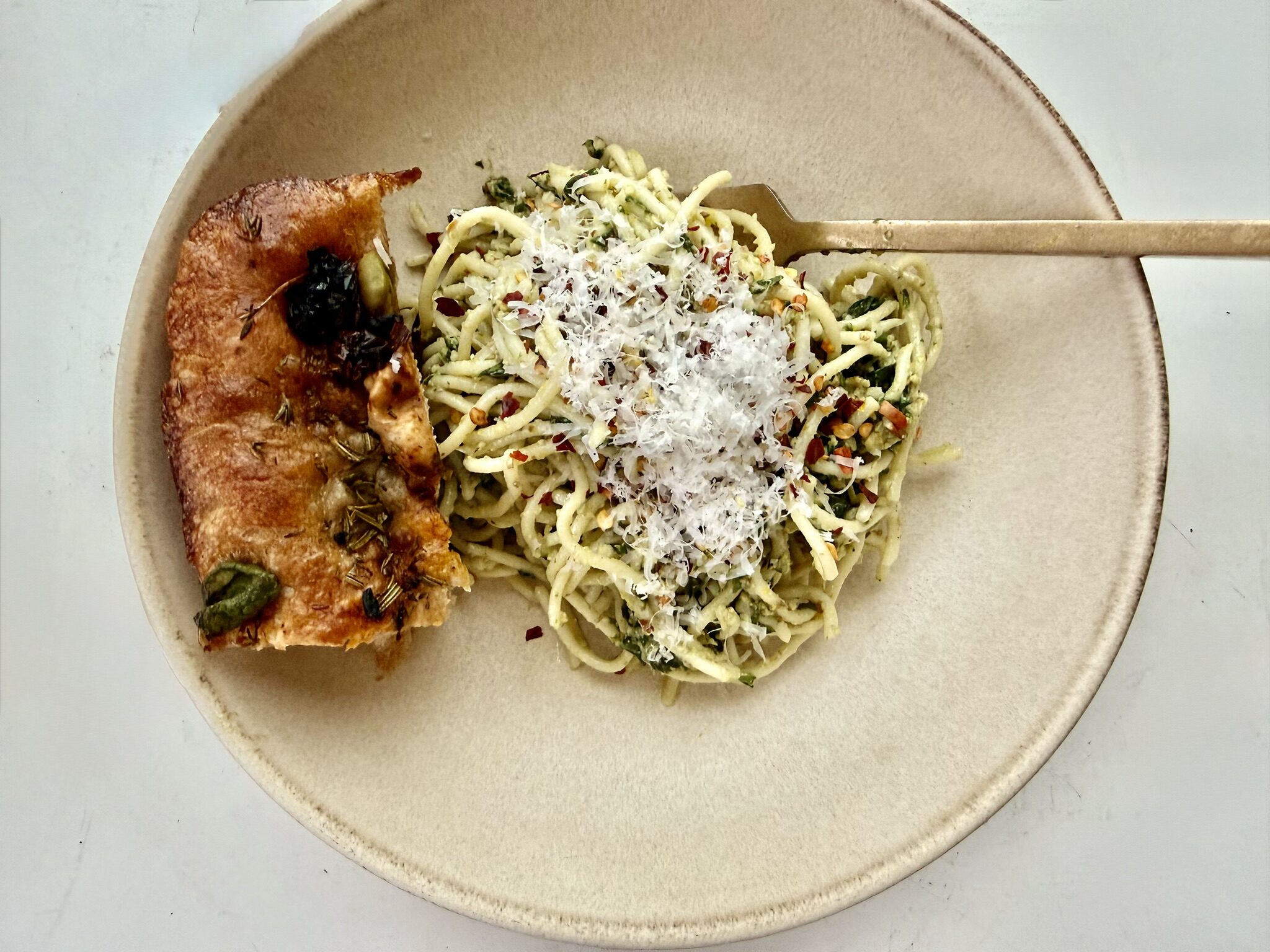

Ingredients
Equipment
Method
- Clean basil and peel the young garlic cloves.
- Add garlic and salt to a mortar and pestle; pound until a smooth paste forms.
- Add pecans or walnuts and continue pounding until fully integrated.
- Add roughly chopped basil and work into a cohesive paste, keeping the leaves bright and un‑bruised.
- Zest one lemon using a microplane, then squeeze in half the lemon’s juice.
- Stir in olive oil slowly until the pesto loosens and emulsifies.
- Taste and adjust with salt, lemon, or oil. Add grated raw Parmesan and red pepper flakes if desired.
Pro-Tip: Why Mortar & Pestle Makes the Best Pesto: Using a mortar & pestle releases more flavor and more nutrients from garlic than chopping or blending. Crushing by hand ruptures the garlic’s cell walls more completely, creating higher levels of allicin — the compound responsible for garlic’s immune‑supportive, heart‑healthy benefits and its deep aroma. It also prevents heat & metal contact (which can dull flavor), keeps basil from bruising, & preserves the natural oils in nuts. The result is a pesto that’s brighter, creamier, & more nutrient‑dense.
Tip: Pound the nuts instead of blending them, preserving their oils and preventing heat damage that can reduce nutrient density.
Tip: Add basil last and pound gently. This prevents bruising, oxidation, and nutrient loss — keeping the pesto bright, green, and aromatic.
Tip: Stir the oil in slowly, which emulsifies the pesto without overheating it — protecting those delicate polyphenols.
Tip: Grate fresh, raw Parmesan directly over the finished pesto or over the dish, preserving its raw enzymes.